
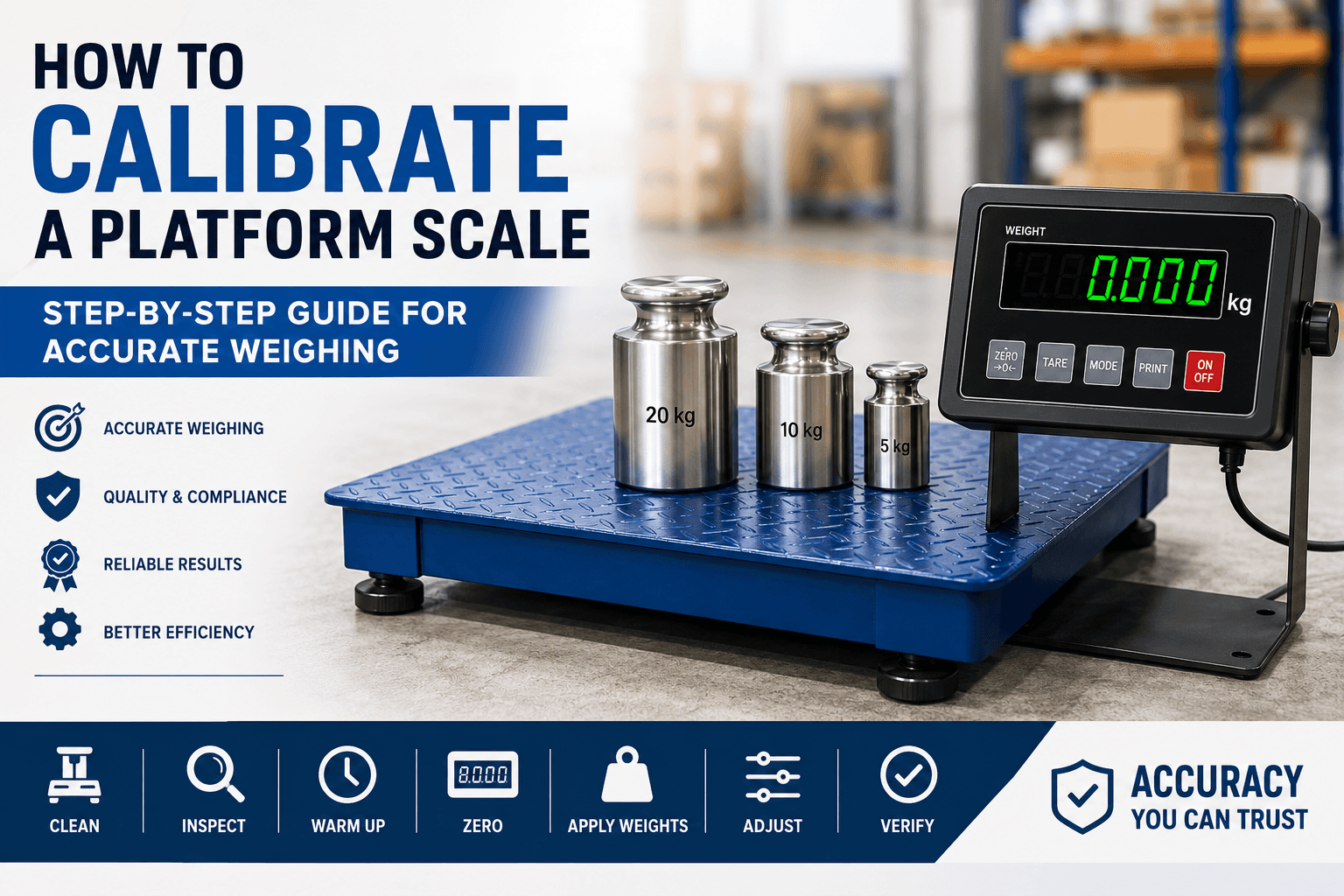
How to Calibrate a Platform Scale: Step-by-Step Guide for Accurate Weighing
Accurate weighing is critical in industries such as manufacturing, logistics, pharmaceuticals, agriculture, food processing, and warehousing. Even a small weighing error can result in financial losses, product quality issues, compliance problems, and dissatisfied customers.
Regular calibration ensures your platform scale continues to provide precise and reliable measurements. In this guide, we'll explain what calibration is, why it's important, and how to calibrate a platform scale safely and accurately.
What is Platform Scale Calibration?
Platform scale calibration is the process of comparing the scale's measurement against certified standard weights and adjusting the scale so it displays the correct value.
Calibration helps ensure:
- Accurate weighing results
- Compliance with quality standards
- Consistent production processes
- Reduced product giveaway
- Customer trust and confidence
Why Regular Calibration Matters
A platform scale may gradually lose accuracy due to:
- Heavy daily usage
- Mechanical wear
- Temperature changes
- Vibration
- Shock from overloads
- Relocation of the scale
Routine calibration prevents these issues from affecting your business operations.
Tools Required for Calibration
Before beginning, gather the following:
- Certified calibration weights
- Clean weighing platform
- Level surface
- Scale user manual
- Spirit level (if required)
Note: Always use calibration weights that are certified and traceable to recognized standards.
Step-by-Step Platform Scale Calibration Process
Step 1: Clean the Scale
Remove dust, dirt, debris, or any material from the weighing platform.
A dirty platform can significantly affect measurement accuracy.
Step 2: Inspect the Scale
Check for:
- Loose cables
- Damaged load cells
- Bent platform
- Display errors
- Mechanical damage
Repair any faults before calibration.
Step 3: Warm Up the Scale
Electronic platform scales should remain powered on for approximately 15–30 minutes before calibration.
This allows the electronics to stabilize.
Step 4: Zero the Scale
Ensure the platform is empty.
Press the Zero button until the display reads:
0.000 kg
Step 5: Enter Calibration Mode
Refer to your scale manufacturer's manual to access calibration mode.
Most digital platform scales require:
- Password
- Service key
- Calibration menu
Step 6: Apply Certified Test Weights
Place the recommended calibration weight gently in the center of the platform.
Example Calibration Weights
| Scale Capacity | Recommended Test Weight |
|---|---|
| 100 kg | 50–100 kg |
| 300 kg | 150–300 kg |
| 500 kg | 250–500 kg |
| 1000 kg | 500–1000 kg |
The displayed weight should match the certified weight.
Step 7: Adjust the Reading
If the displayed value differs from the certified weight, follow the calibration procedure to adjust the scale until the reading is accurate.
Many modern digital indicators allow calibration through the onboard menu.
Step 8: Verify Accuracy
Repeat the test using multiple weights.
Check readings at:
- 25% capacity
- 50% capacity
- 75% capacity
- 100% capacity
This confirms the scale remains accurate throughout its weighing range.
Common Calibration Mistakes
Avoid these common errors:
- Using uncertified weights
- Calibrating on an uneven floor
- Skipping zero adjustment
- Ignoring damaged load cells
- Performing calibration immediately after moving the scale
- Overloading the platform
How Often Should a Platform Scale Be Calibrated?
Calibration frequency depends on usage.
| Usage | Recommended Calibration |
|---|---|
| Daily industrial use | Every 1–3 months |
| Warehouse operations | Every 3–6 months |
| Retail weighing | Every 6 months |
| Laboratory use | Monthly or as required |
| After repairs or relocation | Immediately |
Businesses following ISO quality systems may require scheduled calibration intervals.
Signs Your Platform Scale Needs Calibration
Watch for these warning signs:
- Inconsistent readings
- Different weights for identical items
- Scale fails to return to zero
- Error messages
- Unstable readings
- Failed quality inspections
Ignoring these symptoms can lead to inaccurate inventory, customer complaints, and production losses.
Benefits of Professional Calibration
Professional calibration services provide:
- Higher measurement confidence
- Compliance with quality standards
- Calibration certificates
- Improved equipment lifespan
- Reduced downtime
- Better operational efficiency
Platform Scale Maintenance Tips
To maintain weighing accuracy:
- Keep the platform clean.
- Avoid shock loading.
- Do not exceed maximum capacity.
- Protect the scale from moisture.
- Inspect cables regularly.
- Schedule preventive maintenance.
- Calibrate periodically using certified weights.
Why Choose JB Corporation?
At JB Corporation, we provide reliable industrial weighing solutions, including:
- Platform Scales
- Weighing Indicators
- Load Cells
- Weighbridge Systems
Our team also offers expert guidance on installation, maintenance, and calibration to help businesses maintain accurate and dependable weighing performance.
Whether you operate a warehouse, manufacturing plant, logistics center, or retail business, selecting the right weighing equipment and maintaining proper calibration is essential for consistent and accurate results.
Frequently Asked Questions (FAQs)
Can I calibrate a platform scale myself?
Basic calibration may be possible on some digital scales if you have certified calibration weights and follow the manufacturer's instructions. For legal-for-trade or critical industrial applications, professional calibration is recommended.
What happens if a platform scale is not calibrated?
An uncalibrated scale may produce inaccurate readings, leading to financial losses, inventory discrepancies, quality issues, and potential compliance problems.
How long does platform scale calibration take?
Most routine calibrations take between 15 and 60 minutes, depending on the scale's capacity and configuration.
Can temperature affect calibration?
Yes. Significant temperature changes can influence weighing accuracy. Allow the scale to stabilize before performing calibration.
Do I need certified calibration weights?
Yes. Certified and traceable weights are essential for achieving accurate and reliable calibration results.
Conclusion
Regular platform scale calibration is one of the simplest ways to ensure accurate measurements, maintain product quality, and improve operational efficiency. By following proper calibration procedures and scheduling routine maintenance, businesses can reduce costly weighing errors and extend the lifespan of their equipment.
Whether you use platform scales in manufacturing, warehousing, logistics, or retail, investing in proper calibration helps ensure every measurement is accurate and dependable.
About the Author
JBC Super Admin is a member of the JB Corporation team with expertise in our products and industry solutions.